The Improvement Ledger, No. 14 of 20
Dan Norby says the quiet part out loud on this one: a successful universal design remodel keeps a listing off the market. It is the only project of the twenty whose main purpose is not resale, and that is exactly why it belongs in the ledger.
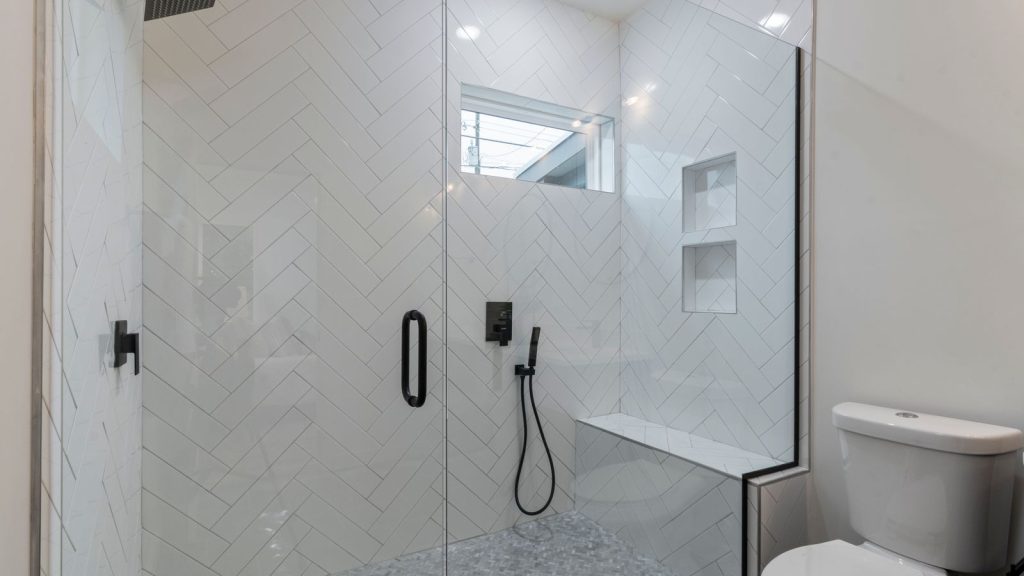
Entry No. 14 converts a standard 5 by 7 foot bathroom into a room that works for every body: a 36 inch doorway, a comfort height toilet, grab bars rated to 250 pounds that look like towel bars, and the centerpiece, the tub removed in favor of a curbless walk in shower. In the 2021 national Cost vs. Value data it cost $38,813 and returned $22,475, a 57.9 percent recoup.
Universal design is not the old handicap accessible. The instructors’ definition: it should not stand out at all. You might be in a universal design bathroom and never notice, because good ones just feel open and easy. The grab bar that reads as a towel bar is the whole philosophy in one fixture: more useful to more people, without announcing itself as medical equipment.
Where does the money go? The floor. Removing the shower curb means the entire floor must slope to a drain, away from the door, waterproofed like a shallow pan across the whole room. Compare entry No. 13, the midrange bath that keeps its tub and therefore its simple floor: $24,424 in the same 2021 data. The difference, about $14,400, is almost entirely that floor. One design decision, one line item, beautifully visible in the data.
What the project actually includes
The printed spec: a 5 by 7 foot bath made wheelchair accessible with a 36 inch doorway, comfort height toilet with an elongated bowl and bidet seat, the tub removed for a curbless tiled walk in shower with an adjustable showerhead, fold out seat, thermostatic mixing valve and a bi directional glass door, electric radiant heat under luxury vinyl tile, an adaptive vanity with easy grasp handles, and grab bars rated to support 250 pounds.
The course numbers, No. 14 of 20, 2021 national report
The course frames this project twice, and both framings matter. To a seller, it is a 57.9 percent recoup in the 2021 national data, middle of the pack. To a family, it is the project that answers a different question entirely: how do we keep mom and dad in their own home longer? The instructors are candid that this remodel is contrary to what agents might want, because done well it prevents a listing. I think that candor is exactly why you should trust the rest of their numbers.
There is also a buyer side version of this conversation the course teaches, and it expands choices instead of shrinking them. A buyer who needs accessibility is not limited to the tiny inventory of already converted homes. Any house with a decent 5 by 7 bath is a candidate, about $52,000 in the 2025 San Francisco metro data to convert. Knowing that number turns a constraint into a plan.
What the current report says about our market
The 2025 San Francisco metro figures: job cost $52,228, resale $26,598, a 50.9 percent recoup, against 56.8 percent for the Pacific region and 61.2 percent nationally. Interesting detail: this is one of the few projects where the national return beats our metro by ten points. The market here pays for granite it can photograph more readily than for thoughtful engineering it cannot see in a listing photo. I wish that were different.
Cost recouped, 2025 report
Source: 2025 Cost vs. Value Report, Zonda Media / Remodeling, San Francisco metro, Pacific region and national data as published at jlconline.com. © 2025 Zonda Media, a Delaware corporation. Complete data from costvsvalue.com.
The dollars, San Francisco metro, 2025 report
Source: 2025 Cost vs. Value Report, Zonda Media / Remodeling, San Francisco metro, Pacific region and national data as published at jlconline.com. © 2025 Zonda Media, a Delaware corporation. Complete data from costvsvalue.com.
Read the fine print with me
The 2021 and 2025 editions of this report are not comparable to each other. Beginning with recent editions, Zonda draws job costs from Verisk’s XactRemodel estimating data and pairs them with resale opinions from a national survey of more than 6,000 REALTORS®. The garage door moved from about 94 percent recouped in 2021 to about 268 percent in 2025 largely because the measurement changed, not because the world did.
So treat every percentage as a ranking signal with a year stamp, never as a promise. These are averages for professionally installed projects across a whole metro. Your street, your house and your contractor will differ. Return of investment, not return on.
The Fremont footnote
The Tri City angle is demographic and real. Multigenerational households are common in Fremont, Newark and Union City, and parents moving in is often the exact trigger for this remodel. Three practical notes. First, the sloped waterproofed floor is permit and inspection work in California, genuinely not a weekend project, and the inspection is protecting the floor structure below. Second, ADA is a public accommodations law; it does not require anything in a private home, so this is entirely a choice, not compliance. Third, a fair housing note for my own side of the table: the accessibility conversation belongs to the client who raises it. Answering questions about conversion feasibility is service. Steering anyone toward or away from homes based on perceived ability or age is illegal, and the line between the two is letting the client lead.
What I would actually tell you
If aging in place is on your family’s horizon, this is the best money in the book measured in the currency that actually matters, years at home. Do it early, while the stairs are still easy, because the remodel takes months and the need rarely announces itself politely. If you are selling a house that already has one, we market the engineering: the curbless shower, the wide doorway, the radiant floor are exactly what a knowledgeable segment of Tri City buyers is hunting for and rarely finds. Either way, call or text 510 600 3425. This one deserves a conversation, not a spreadsheet.
Check a contractor quote against the report
Enter a real quote for this project. I will apply the 2025 San Francisco metro recoup rate (51 percent) so you can see the planning picture in dollars before you sign anything.
A planning illustration, not a valuation or a promise. It applies one published metro average to your number, nothing more. The improvement conversation for your own house belongs in a pre listing consult with real comps.
Questions I hear about this project
- What does a universal design bathroom remodel cost?
- The 2025 Cost vs. Value Report prices it at about $52,228 in the San Francisco metro, versus about $42,183 nationally, for a 5 by 7 bath converted with a curbless shower, 36 inch door, comfort height toilet and radiant floor. The curbless shower floor, which must slope and be waterproofed across the room, is the single biggest cost driver.
- Does an accessible bathroom hurt or help resale value?
- Done in the universal design style, it should not hurt. The whole philosophy is a room that reads as open and premium rather than clinical, grab bars styled as towel bars, a sleek glass shower. The 2021 national data measured a 57.9 percent recoup, mid pack. For the right buyer, often a multigenerational household, it is a rare and decisive feature.
- Is a walk in shower conversion a good idea for aging in place?
- It is the highest impact single change, because stepping over a tub wall is the most common point of failure in an aging household. Pair the curbless shower with a fold out seat, a thermostatic valve and real grab bars. In California this is permitted, inspected work, so budget for a licensed contractor rather than a handyman.
The Improvement Ledger
Previously in the ledger: No. 15, the midrange major kitchen. Next entry: No. 13, the midrange bath. The whole countdown, and what it teaches, lives in the closing entry and under Real Estate Wisdom.
Harv Balu, REALTOR®, DRE #02195792, REALTY EXPERTS®, Fremont, California. Call or text 510 600 3425. Cost and resale figures are published averages from the Zonda Media / Remodeling Cost vs. Value Report, cited by edition year and geography in the body; they are planning references, not quotes, valuations or guarantees of any outcome. Building code, Title 24, WUI and disclosure notes are general information about California practice, not legal advice; verify current requirements with the local building department before contracting work. Equal Housing Opportunity. Information deemed reliable but not guaranteed.