The Improvement Ledger, No. 20 of 20
I am starting this series at the bottom of the table on purpose. The worst ranked project of the twenty is the one clients ask me about first, and the math behind it is the best teacher in the whole course.
This summer I finished a four hour continuing education course built on one dataset: the 2021 Cost vs. Value Report from Zonda Media, the publisher of Remodeling magazine, which tracks what twenty common projects cost and what they return at resale. Over the next six weeks I am going to walk through all twenty, worst to best, with current San Francisco metro numbers beside each one. Welcome to the ledger. Entry one is the project that finished dead last.
A bathroom addition sounds modest. It is anything but. An addition means the house gets bigger: you excavate, you pour a slab or build a crawlspace, you frame walls, you roof and shingle over the top, and only then do you fill the shell with fixtures. As instructor Dan Norby put it, “we have to build the shell first, then fill it with stuff.”
The project the report prices is a 6 by 8 foot bath, all of 48 square feet. In the 2021 national data it cost $56,946 and returned $30,237 at resale, a 53.1 percent recoup, twentieth out of twenty. Work that out per foot and the number is startling: about $1,186 per square foot. Norby, a thirty year contractor, tells people ordinary new construction runs a few hundred dollars a foot. The tiny addition costs roughly triple his deliberately generous ceiling, because the fixed costs never scale down. The excavator shows up either way. The roofer shows up either way.
What the project actually includes
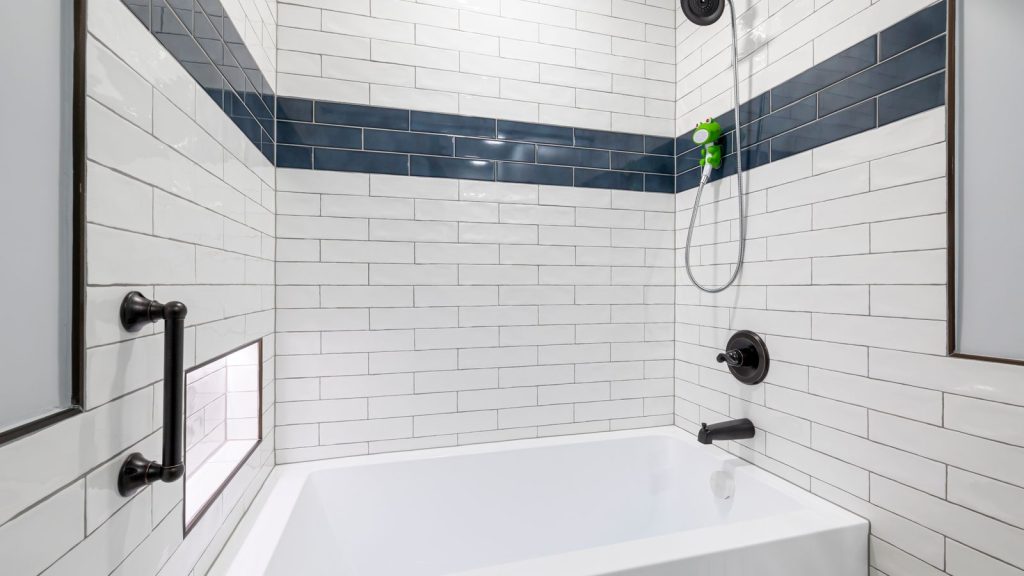
The printed spec: a 6 by 8 foot bathroom added over a crawlspace with poured concrete walls, a cultured stone vanity top with a molded sink, a 30 by 60 inch fiberglass tub and shower with a ceramic tile surround, and a ceramic tile floor. Midrange grade throughout. In the instructors’ words, no gold toilet seats. This is an everyday bathroom, bolted onto the side of the house because outward was the only direction left to build.
The course numbers, No. 20 of 20, 2021 national report
Why does it rank last? Because a small addition is the most expensive square footage you can build, and buyers do not price your house by what the concrete cost you. The course puts the upscale kitchen at about $745 per square foot in the same 2021 national data. The 48 foot bathroom costs about 60 percent more per foot than a top of the line kitchen. That comparison, more than any percentage, is what I want sellers to hear.
And yet the course never says do not build it. It says know the number before the money moves. The family in the example is living in a three bedroom house with one bathroom and kids getting older. They are not buying resale value, they are buying ten years of mornings that work. That is a legitimate purchase. It is just not an investment, and an agent who promises otherwise, in Norby’s words, is “how people get in trouble.”
What the current report says about our market
Now the local cut. In the 2025 report the same midrange bathroom addition prices at $73,837 in the San Francisco metro, against $65,326 for the Pacific region and $60,645 nationally, with the metro recouping 49.2 percent. Our market builds expensive and returns thin on this one. Roughly half the check does not come back.
Cost recouped, 2025 report
Source: 2025 Cost vs. Value Report, Zonda Media / Remodeling, San Francisco metro, Pacific region and national data as published at jlconline.com. © 2025 Zonda Media, a Delaware corporation. Complete data from costvsvalue.com.
The dollars, San Francisco metro, 2025 report
Source: 2025 Cost vs. Value Report, Zonda Media / Remodeling, San Francisco metro, Pacific region and national data as published at jlconline.com. © 2025 Zonda Media, a Delaware corporation. Complete data from costvsvalue.com.
Read the fine print with me
The 2021 and 2025 editions of this report are not comparable to each other. Beginning with recent editions, Zonda draws job costs from Verisk’s XactRemodel estimating data and pairs them with resale opinions from a national survey of more than 6,000 REALTORS®. The garage door moved from about 94 percent recouped in 2021 to about 268 percent in 2025 largely because the measurement changed, not because the world did.
So treat every percentage as a ranking signal with a year stamp, never as a promise. These are averages for professionally installed projects across a whole metro. Your street, your house and your contractor will differ. Return of investment, not return on.
The Fremont footnote
Three things change the conversation in Fremont, Newark and Union City. First, an addition here means permits, Title 24 energy compliance and often a soils conversation, so the lead time is real and the quote you get will not be the national average. Second, before you extend the footprint, price the alternative the course itself teases: carving the space out of the interior you already own, which avoids foundation work entirely. I will cover that math at entry No. 17. Third, in our multigenerational households the second bathroom is often about parents moving in, and that changes which features matter more than any resale table.
What I would actually tell you
The course’s cleanest client tool is the hold time rule. Staying put for years? Interior projects are about usability, and a family that needs the bathroom should build the bathroom with clear eyes. Selling within a year or two? This is the wrong project. You will spend Bay Area construction money and hand most of it to the next owner. Sometimes the honest answer is to price the house for what it is missing instead, and my post on how mispricing actually costs sellers shows why that number needs to be right on day one. The improvement conversation belongs at a pre listing consult, six to twelve months out, not thirty days before the sign goes up. Call or text me at 510 600 3425 and we will run your address, not a national average.
Check a contractor quote against the report
Enter a real quote for this project. I will apply the 2025 San Francisco metro recoup rate (49 percent) so you can see the planning picture in dollars before you sign anything.
A planning illustration, not a valuation or a promise. It applies one published metro average to your number, nothing more. The improvement conversation for your own house belongs in a pre listing consult with real comps.
Questions I hear about this project
- How much does a bathroom addition cost in the Bay Area?
- The 2025 Cost vs. Value Report prices a midrange 6 by 8 foot bathroom addition at about $73,837 in the San Francisco metro, against about $60,645 nationally. That is a published metro average for a professionally built project, not a quote. Small additions carry the highest cost per square foot of anything you can build, because excavation, foundation, framing and roofing do not shrink with the room.
- Does adding a bathroom increase home value?
- Yes, but by much less than it costs. The 2021 national report measured a 53.1 percent recoup, and the 2025 San Francisco metro figure is about 49.2 percent. A second bathroom can make a house easier to sell, especially a one bath house, yet the dollars added at resale run about half the dollars spent. Build it for the years you will live with it, not for the sale.
- Is it cheaper to add a bathroom inside the existing house?
- Usually, substantially. Converting existing interior space avoids excavation, foundation and roof work, which is where an addition’s money goes. The same report family prices an upscale bathroom remodel within the existing footprint at less per finished square foot than the tiny addition. If a closet, hallway or corner of a large bedroom can become the bathroom, price that first.
The Improvement Ledger
Next entry: No. 19, the upscale kitchen. The whole countdown, and what it teaches, lives in the closing entry and under Real Estate Wisdom.
Harv Balu, REALTOR®, DRE #02195792, REALTY EXPERTS®, Fremont, California. Call or text 510 600 3425. Cost and resale figures are published averages from the Zonda Media / Remodeling Cost vs. Value Report, cited by edition year and geography in the body; they are planning references, not quotes, valuations or guarantees of any outcome. Building code, Title 24, WUI and disclosure notes are general information about California practice, not legal advice; verify current requirements with the local building department before contracting work. Equal Housing Opportunity. Information deemed reliable but not guaranteed.