The Improvement Ledger, No. 17 of 20
This is the entry where the course teaches the difference between building space and borrowing it. Borrowing is cheaper. The question is what you borrowed it from.
Entry No. 17 takes a cramped 35 square foot bathroom and turns it into a 100 square foot retreat, entirely inside the existing walls. Marble, a freestanding soaker tub, glass block for daylight, pendant lights, built in cabinetry. In the 2021 national Cost vs. Value data it cost $75,692 and returned $41,473, a 54.8 percent recoup.
Set it against entry No. 20 and the structural lesson jumps out. The tiny bathroom addition bought 48 new square feet for $56,946. This project bought a 100 square foot bathroom for a third more money, because nobody poured concrete. Working inside the existing structure, with no foundation and no roof, is how you buy finished space at a civilized price. That lesson travels to every project in the series.
But the space has to come from somewhere. The course’s own common scenario is three bedrooms upstairs, convert one into the bigger bath. And there is the trap: bedroom count is a hard comp driver, the number every search filter and every appraisal grid starts with. A spa bath is a soft one. Trade a countable bedroom for an uncountable luxury and your house can genuinely comp lower after a $75,000 improvement.
What the project actually includes
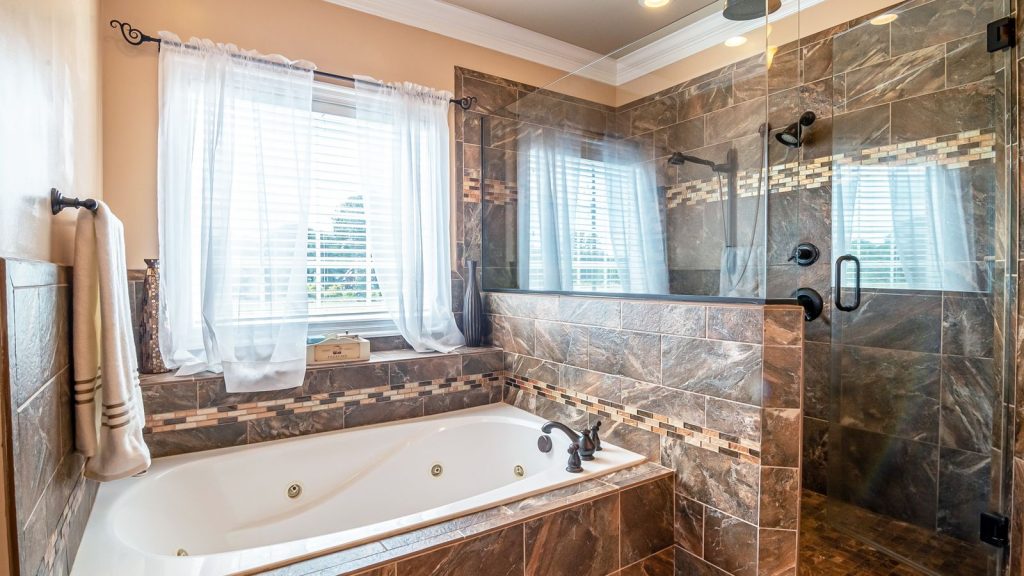
The printed spec: expand a 35 square foot bath to 100 square feet within the existing footprint, ceramic tile shower walls, a freestanding soaker tub with high end faucets, a stone countertop with two sinks, in floor heat, and a custom vanity. Walls move, closets vanish, plumbing gets rerouted. It is real construction, just construction that never touches dirt.
The course numbers, No. 17 of 20, 2021 national report
Why 54.8 percent? Same law as the kitchens: past the midrange, bathroom dollars buy taste, and the market reimburses function. The course’s four bathroom projects line up in a perfect staircase in the 2021 national data: midrange remodel $24,424 at 60.1 percent, universal design $38,813 at 57.9 percent, upscale $75,692 at 54.8 percent, and the addition $56,946 at 53.1 percent. Among the three remodels, every extra dollar of tier buys a worse ratio. And the addition loses to all of them despite not being the priciest, because foundation money never comes back. Cheapest bath wins, any addition loses.
What the current report says about our market
The 2025 San Francisco metro figures: job cost $97,394, resale value $34,159, a 35.1 percent recoup, versus 44.5 percent for the Pacific region and 41.7 percent nationally. Two thirds of the check stays behind. Our metro builds this project more expensively than almost anywhere and values it less generously than the national average.
Cost recouped, 2025 report
Source: 2025 Cost vs. Value Report, Zonda Media / Remodeling, San Francisco metro, Pacific region and national data as published at jlconline.com. © 2025 Zonda Media, a Delaware corporation. Complete data from costvsvalue.com.
The dollars, San Francisco metro, 2025 report
Source: 2025 Cost vs. Value Report, Zonda Media / Remodeling, San Francisco metro, Pacific region and national data as published at jlconline.com. © 2025 Zonda Media, a Delaware corporation. Complete data from costvsvalue.com.
Read the fine print with me
The 2021 and 2025 editions of this report are not comparable to each other. Beginning with recent editions, Zonda draws job costs from Verisk’s XactRemodel estimating data and pairs them with resale opinions from a national survey of more than 6,000 REALTORS®. The garage door moved from about 94 percent recouped in 2021 to about 268 percent in 2025 largely because the measurement changed, not because the world did.
So treat every percentage as a ranking signal with a year stamp, never as a promise. These are averages for professionally installed projects across a whole metro. Your street, your house and your contractor will differ. Return of investment, not return on.
The Fremont footnote
In Fremont the bedroom conversion question is even less forgiving than the national course suggests. Our buyers are frequently multigenerational households counting sleeping rooms, and school boundary shoppers comparing four bedroom homes against four bedroom homes. Dropping from four to three moves you into a different comp set entirely, often a six figure difference that no bathtub earns back. If the spa bath fits inside dead space, a hallway, an oversized closet, an awkward laundry area, the math changes completely. The move is to find the 100 square feet without touching the bedroom count.
What I would actually tell you
What I would actually tell you: staying ten years and dreaming about that tub every night? Inside the existing footprint, borrowing from anything except a bedroom, go live your life. Selling soon? The 2025 metro math says this is a 35 cent dollar, and the smarter pre sale bathroom move is the midrange refresh coming up at entry No. 13. Either way, protect the bedroom count first and pick fixtures second. Call or text 510 600 3425 and I will tell you which comp set your floor plan is really competing in.
Check a contractor quote against the report
Enter a real quote for this project. I will apply the 2025 San Francisco metro recoup rate (35 percent) so you can see the planning picture in dollars before you sign anything.
A planning illustration, not a valuation or a promise. It applies one published metro average to your number, nothing more. The improvement conversation for your own house belongs in a pre listing consult with real comps.
Questions I hear about this project
- What does an upscale bathroom remodel cost in the Bay Area?
- The 2025 Cost vs. Value Report prices an upscale bathroom remodel at about $97,394 in the San Francisco metro, versus about $81,612 nationally. The spec expands a 35 square foot bath to 100 square feet within the existing footprint with stone counters, a freestanding tub and in floor heat. Local quotes move with plumbing complexity and finish choices.
- Does converting a bedroom into a bathroom hurt resale value?
- Often, yes. Bedroom count is one of the first filters buyers and appraisers apply, so a four bedroom home that becomes a three bedroom home competes in a cheaper comp set, and in family driven Fremont neighborhoods that gap can exceed anything the new bathroom adds. If the only space available is a bedroom, get a comp analysis before committing.
- Which bathroom project has the best return?
- The cheapest one. In the 2021 national rankings the midrange bath remodel returned 60.1 percent, universal design 57.9 percent, upscale 54.8 percent and the addition 53.1 percent. The pattern holds in the 2025 San Francisco metro data too. Refreshing what exists beats expanding it, and any project that pours foundation returns the least.
The Improvement Ledger
Previously in the ledger: No. 18, the primary suite addition. Next entry: No. 16, the metal roof. The whole countdown, and what it teaches, lives in the closing entry and under Real Estate Wisdom.
Harv Balu, REALTOR®, DRE #02195792, REALTY EXPERTS®, Fremont, California. Call or text 510 600 3425. Cost and resale figures are published averages from the Zonda Media / Remodeling Cost vs. Value Report, cited by edition year and geography in the body; they are planning references, not quotes, valuations or guarantees of any outcome. Building code, Title 24, WUI and disclosure notes are general information about California practice, not legal advice; verify current requirements with the local building department before contracting work. Equal Housing Opportunity. Information deemed reliable but not guaranteed.